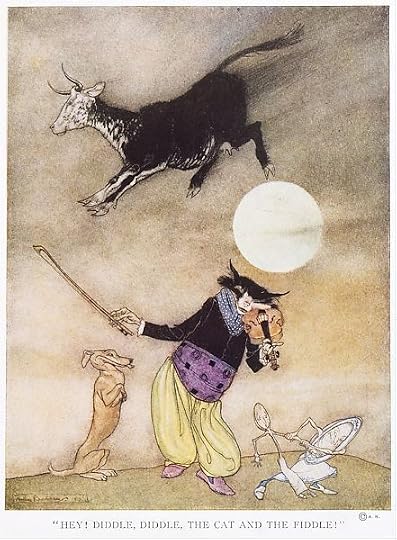
Here's
an example of a writer's worst nightmare - a book review written by
someone who has absolutely no feel for your type of writing
(understatement). I couldn't imagine two writers more dissimilar - Barry
Yourgrau and Kathy Acker!
Back in 1987 when I read this review, I could hardly believe a New York Times
editor would actually choose the snarly queen of East Village punk and
twisted violence, Kathy Acker, to review the charming, ever delightful
stories written by Barry Yourgrau.
Here it is, Kathy Acker's grossly inaccurate and insensitive misreading of Barry's Wearing Dad's Head.
And, following the review, Barry's Letter to the Editor. By the way, a
couple of years ago Barry told me just thinking about this review still
"sticks in one's craw."
------------------------------------------------------------
Kathy Acker's Review:
BARRY
YOURGRAU'S third book, ''Wearing Dad's Head,'' was written soon after
his parents' deaths and, according to the author, ''represents opening
the door to family things in my writing.''
In ''Blood and
Flowers,'' the 70th of the 73 very short stories in this book, the
narrator, who seems to be Mr. Yourgrau, and his mother are having a
drink on a hotel veranda. They discuss the mother's films. Perhaps
because the word ''film'' connects to the word ''camera,'' a
photographer ''springs up'' from the abyss that surrounds all these
short stories and takes a photograph of them. Enraged, the mother runs
to her red sports car. Red as in anger. She drives this car faster and
faster, in fury, a whirlwind of anger. She crashes the red car. When her
son, who is with her, comes to, he sees the car. Its red looks like
blood. His mother is pinned, bleeding, under the car. There are roses.
His mother dies.
Like many of Mr. Yourgrau's stories, this one is
built around both verbal and visual jokes and similarities - the
actress is annoyed by a camera, and so on. In ''Night Work,'' a man who
can't sleep takes a job driving a taxi at night. His first passenger, a
woman, directs him to a river, then into the river. She becomes a fish.
The next night the driver's father gets into his cab and tells his son
that they're both going to a party. The people at this party will be the
son's old schoolmates. The father disappears. Another night a young man
who has a leopard appears. A girl turns into a violin. (Duchamp's?) The
taxi driver discovers that driving a cab through the night is like
dreaming.
In this story, image reels into image. There is no
central image, no one absolute meaning. Generally, in ''Wearing Dad's
Head,'' although the majority of the stories feature one or both of Mr.
Yourgrau's parents, no single clear image of either parent emerges.
Likewise, in these stories traditional narration, which relies on
Aristotelian cause and effect, seemingly imaging human experience, has
given way to forms based more on language, on wordplay and on the
construction of dreams, on the seemingly causeless or free movement of
image into image.
This prose poem from ''Le Cornet a Des'' by Max
Jacob, published in 1917 and translated by Gerald Kamber, has the same
structure as Barry Yourgrau's short stories: ''You are as a foaming pot
of boiling milk under the balloon, mountains, and from there soon
emerges, like a gigantic dice cup, good-natured Old Man Globe, the
forehead of Father Double Sphere.''
In the poem, ''you'' becomes a
person in an air balloon who then becomes what is seen: mountains. The
physical image of mountains becomes a metaphysical one, a dice cup. The
image of chance or change then turns into ''le bonhomme globe.'' These
are the two dice that compose Father Double Sphere, the hemisphere. As
in Mr. Yourgrau's stories, image has rolled into image often through
visual association; the meaning of the piece lies in its form.
Cubists
such as Max Jacob used nontraditional narrative arrangements to open up
aspects of reality that our habits often prevent us from seeing. They
used unusual ways of writing in order to perceive. For instance, in the
above poem, Jacob arrived at the shocking mirror relation between the
view that reality is inimical to humans and the view that reality is
''bonhomme,'' favorable to humans.
No such metaphysics or depths
appear in ''Wearing Dad's Head.'' Mr. Yourgrau seems to be using Cubist
techniques without showing why he is using them, or perhaps having a
reason for using them. Tipping a hat, or a head, to Heraclitus: a poetic
act in 1917 cannot be the same act in 1987. Maybe Mr. Yourgrau's
surface of whimsy, a surface so hard that it never gives way to
metaphysics or to real nightmare, is applicable to a society that is
desperately holding on to whimsy, to fun, so as not to fall into the
despair lying underneath.
-------------------------------------------------------------------
Barry's Letter to the Editor:
To the Editor:
I
realize the reviewer one gets for one's book is pretty much the luck of
the draw. And so I suppose I drew the short, woeful straw when I got
Kathy Acker as reviewer of my book of stories, ''Wearing Dad's Head''
(Nov. 8). It's like having an arms dealer's opinion on Mother Goose.
My
work has got nothing to do with ''language,'' ''wordplay'' or ''Cubist
techniques''; nor with artsy-critical flummery involving Max Jacob and
metaphysics; nor with meaning being derived from form. The meaning of my
work is not derived from its form. Perhaps Miss Acker is thinking of
her own line of writing. She certainly is not describing mine, which is
about the way childhood mingles with adulthood, about farce getting all
mixed up with the poignant things of life.
I won't go into Miss
Acker's excruciating misrepresentations and misreading of the two
stories of mine she cites specifically. I'll just observe that someone
who can claim, as she does, that ''although the majority of the stories
feature one or both of Mr. Yourgrau's parents, no single clear image of
either parent emerges'' - this someone simply knows peanuts about
parents and images.
But please. I won't ask the reader to just
take my word on all this. Despite Miss Acker, I hope he or she will have
a look at ''Wearing Dad's Head'' and find out the story for themselves.
Barry Yourgrau, born 1949
Comments
Post a Comment