
THE VINTAGE BOOK OF LATIN AMERICAN STORIES
Both editors, Carlos Fuentes and Julio Ortega, emphasize their collection focuses on the innovative quality of the Latin American short story along with new and more imaginative trends in literature rather than any national or standard criteria. Thirty-nine stories collected here, ranging from familiar names like Jorge Luis Borges, Clarice Lispector, and Gabriel García Márquez to less well-known authors such as María Luisa Puga, Senel Paz, and Juan Villord. I enjoyed all of these tales, some more than others, but there are three short stories, all new to me, that especially resonated. And it is this trio I'll highlight in my review with the hope that what I write will motivate you to pick up this fine anthology.
NOTES FROM BUENOS AIRES by Mario Levrero (Uruguay)
Mario Levrero compiled a batch of intriguing diary entries when visiting Buenos Aires in the late 1980s which are very much in keeping with the maestro's masterful La novela luminosa (The Luminous Novel). I'll link my comments to three memorable excerpts.
“Sitting on a bench in the square I watched the pigeons; that's not at all original, since you can hardly see anything else; but I mean that I managed to fill out my opinion about pigeons, something which up till now had simply been a vague feeling of unease. Just as rats have a bad press, I concluded, pigeons have a good press, both cases being arbitrary and incomprehensible.”
Mario goes on to tell that rats, by his observation, are intelligent, witty, gentle, and friendly creatures, whereas, on the other hand, pigeons are “ridiculous, gluttonous, and extremely promiscuous, as well as lacking in any trace of intelligence and sensitivity.” He then concludes by admitting his hate for the way pigeons walk, a little stumbling way of walking similar to hens and some obese, obtuse women, amounting to a sort of extreme female caricature that might even amount to a kind of female essence. You have to love an author who has spent hours (as underscored in his Luminous Novel) watching the world's creatures with a mixture of fascination and disgust along with making quirky judgments and comparisons.
“And I've fallen in love, in an insistent, obsessive, adolescent way; this obsession has filled countless sleepless nights. In a way it cheers me that I've rescued the possibility of loving, which I'd believed to be lost amidst age and the cynicism of age. Although I've felt my chest seething with the anguish of love, pained, ill-treated, a sort of punchbag.”
Mario provides a score of vivid, tantalizing details of his relationship with the attractive lady he's hopelessly in love with. Ah, to be pushing fifty and yet to have the heart of a teenage Romeo.
“Here, in the square, there's a man I could say an old man, who is defying the sun. He's well built and although he's poorly dressed he has a noble presence, that rare spiritual aristocracy that I have only detected in certain humble people (and which makes me feel contemptible).”
There came that fateful day when Mario spots his idol (the author's actual word) wearing a ridiculous hat made of plastic straw with a goofy flower design on the plait, which turns the old man's noble presence into a cheesy comedy act. I can picture Mario sitting under the noonday sun in that Buenos Aires park shaking his bald head, musing on all the ways life can quickly plummet for us poor humans.

Mario Levrero, 1940-2004
PANTHER EYES by Luisa Valenzuela (Argentina)
Among the most mysterious and eerie stories in the collection, a story in two parts where the reader is given a choice of nine possible endings. Here's how the story begins: "They're moving along the corridor in the dark. Suddenly, she turns round and he screams. What's up? she asks. And he answers: Your eyes, your eyes are phosphorescent like the eyes of wild animals."
This is one story where I dare not say more, other than urge you to give this dark gem of Luisa Valenzuela an opportunity to glow.
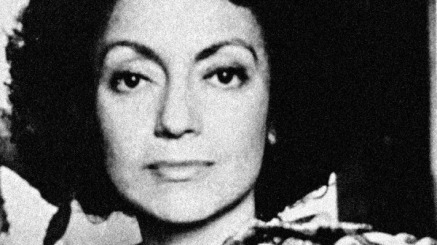
Luisa Valenzuela, Born 1938
THE ONE WHO CAME TO SAVE ME by Virgilio Piñera (Cuba)
“I always had one great fear: not knowing when I would die.” So begins this singular tale narrated by an unnamed gent I'll call Raul. Oh, yes, Raul became obsessed with the uncertainty of the very moment when he would shuffle off his moral coil.
It all started back when Raul, age ten, was sitting on a toilet taking a crap in a movie theater restroom. Two men came in and tied a noose around another man's neck by the urinals. The victim called out, “But you're not going to kill me.” Raul looked through the grating and could see a knife slitting a throat, blood streaming out. He heard a scream and feet running away at full speed. When the police arrived on the scene, they found poor Raul unconscious, in what they called “a state of shock.”
Raul retraces the various modes his fear manifested during his years from young man, middle-aged man, and, finally, old man. One experience stood out: when he was in his early seventies, he took his first airplane. Two hours into the flight, the plane was caught in an incredible storm. All of the passengers were filled with terror, screaming mixed with the Lord's Prayer and Hail Marys. But not Raul. He tells us, “Thank God that for the first time I'm approaching a certain precision concerning the moment of my death.” Raul confesses that he rejoiced wildly, the only paradise glimpsed during his long life.
When Raul reaches his early nineties, his obsession becomes even more extreme. “And I freeze myself and burn myself more and more. I've become a worn-out exhibit from a museum of teratology and at the same time, the very picture of malnutrition. I'm sure it's not blood but pus that runs through my veins; my scabs – festering, purplish – and my bones seem to have conferred a very different anatomy on my body. My hip bones, like a river, have overflown their banks; my collarbone (as I lose my flesh) is like an anchor hanging over the side of a ship; the occipital bone makes my head look like a coconut bashed in with a sledgehammer.”
Through it all Raul keeps thinking if this is the very moment he's been waiting for all of his life. However, it never seems to come. Until one evening – the unexpected. A stroke of magic, Virgilio Piñera-style.

Virgilio Piñera, 1912-1979
Comments
Post a Comment