
"Isabel continues to watch me. Nothing else. She does not ask me any questions. She does not reproach me. She does not cry. She does not play the victim."
For one philosophy course back in college, we were assigned works of social psychology: The Transparent Self by Sidney Jourard, R. D. Laing’s Sanity, Madness and the Family and Eric Fromm’s The Sane Society, all three books addressing the prevailing sickness of dishonest, inauthentic modern living and the need to express our genuine inner feelings. As if on cue, a front page headline from our city newspaper featured a group photo: husband and wife and their four little kids, all smiling for the camera, the apple pie American family. The article provided the grizzly details - at night when everybody in the family was all snuggley in bed, the husband used a pistol to shoot all four of his kids, his wife and then himself. The instructor and everyone else in class agreed: this gentleman, one of the pillars of his suburban town, could have benefited by the books on our reading list.
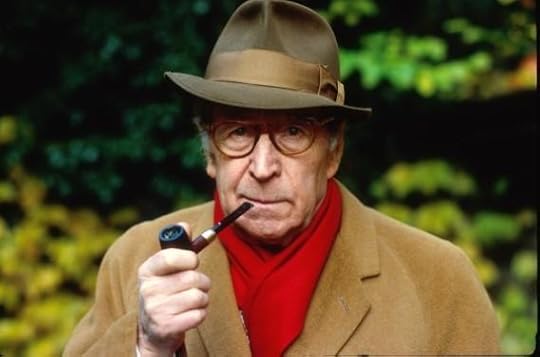
Also, as if on cue, in 1968 Georges Simenon wrote The Hand, a non-Detective Maigret existential romans durs (hard novel) set in suburban Connecticut, USA. Likewise, the protagonist of Simenon's novel might very well have profited by a careful reading of one of these social psychology books, my personal favorite, I reckon, Sidney Jourard's The Transparent Self.
I can clearly picture Georges at his desk, writing at white heat, merging into his protagonist, Donald Dodd, a forty-five year old successful lawyer and graduate of Yale Law School. The author tells the lawyer’s harrowing tale in first-person, one of the rare first-person novels Simenon wrote (he pumped out an astonishing number, over five hundred). That’s right – over five hundred novels! Guy makes Stephen King look like a slacker.
And what a tale. Not a word is wasted; literature as an exercise in stripped down economy. As a number of literary critics have noted, Simenon used language that could be easily understood and appreciated by anybody who wished to read his books. Additionally, more sophisticated vocabulary and baroque phrases would have only slowed him down.
To round out the quartet of major characters, in addition to Donald Dodd we have Donald’s wife Isabel and his best friend Ray, also a Yale Law School graduate, and Ray’s wife Mona. I suspect Simenon chose the profession of lawyer for both Donald and Ray since in 1960s America doctors and lawyers were professions held in the highest esteem, examples of shining success. Recall the number of television series starring lawyers such as Perry Mason and the father son lawyer team in The Defenders.
The opening chapter sets the stage for unfolding drama: It’s January and we join Donald, Isabel, Ray and Mona as they drive north to attend an evening party held at the home of wealthy social magnet Harold Ashbridge. The house is packed with guests, several dozen men and women drinking and talking, drinking more and talking more, on and on deep into the night.
At one point Donald goes upstairs and opens the bathroom door – he catches Ray and Harold’s beautiful young wife Patricia having sex standing up. Only Patricia notices Donald. She could care less. Donald quickly retreats back downstairs. He’s shaken and treats himself to more martinis than usual. Eventually the four of them are among the last guests to leave. They have to drive back in a blizzard. Donald is at the wheel - despite the blinding snow, he makes it nearly all the way home.
Four hundred yards from the house Donald runs into a six foot snow bank. The four of them will have to get out and walk on foot through the mounds of snow to the house. Isabel and Mona walk ahead, arm in arm, and finally make their way to the front door. Donald and Ray follow. But in the blizzard there is an unexpected happening - Donald arrives at his house to discover Ray is no longer by his side. Donald looks back; he can barely see beyond his nose. No Ray.
Although totally exhausted, Donald informs the ladies he will go back out to look for Ray. He's not good to his word - he doesn't search; rather he struggles through the raging blizzard to the barn, takes a seat on a red bench and smokes his cigarettes.
Is he a coward? Is he a liar? Does he totally betray his best friend? Has he always been secretly attracted to Mona? These are among the questions Donald poses to himself in the ensuing hours and days. One thing is certain - he vision of his life and everybody around him is completely transformed. He is not the man he supposed himself to be.
There’s a second, equally unsettling recognition: Isabel is not only his wife but his judge and jurors all rolled into one. Isabel doesn’t come right out and confront him as his new, transformed Donald Dodd. Oh, no, that would be too easy. All Isabel has to do is gaze at him in silence with her piercing, penetrating pale blue eyes.
Georges Simenon’s laser vision of one man stepping out of his social roles as husband, father, successful professional, upstanding community member to confront the stark realities of his existence. A gripping existential tale not to be missed.
For one philosophy course back in college, we were assigned works of social psychology: The Transparent Self by Sidney Jourard, R. D. Laing’s Sanity, Madness and the Family and Eric Fromm’s The Sane Society, all three books addressing the prevailing sickness of dishonest, inauthentic modern living and the need to express our genuine inner feelings. As if on cue, a front page headline from our city newspaper featured a group photo: husband and wife and their four little kids, all smiling for the camera, the apple pie American family. The article provided the grizzly details - at night when everybody in the family was all snuggley in bed, the husband used a pistol to shoot all four of his kids, his wife and then himself. The instructor and everyone else in class agreed: this gentleman, one of the pillars of his suburban town, could have benefited by the books on our reading list.
Also, as if on cue, in 1968 Georges Simenon wrote The Hand, a non-Detective Maigret existential romans durs (hard novel) set in suburban Connecticut, USA. Likewise, the protagonist of Simenon's novel might very well have profited by a careful reading of one of these social psychology books, my personal favorite, I reckon, Sidney Jourard's The Transparent Self.
I can clearly picture Georges at his desk, writing at white heat, merging into his protagonist, Donald Dodd, a forty-five year old successful lawyer and graduate of Yale Law School. The author tells the lawyer’s harrowing tale in first-person, one of the rare first-person novels Simenon wrote (he pumped out an astonishing number, over five hundred). That’s right – over five hundred novels! Guy makes Stephen King look like a slacker.
And what a tale. Not a word is wasted; literature as an exercise in stripped down economy. As a number of literary critics have noted, Simenon used language that could be easily understood and appreciated by anybody who wished to read his books. Additionally, more sophisticated vocabulary and baroque phrases would have only slowed him down.
To round out the quartet of major characters, in addition to Donald Dodd we have Donald’s wife Isabel and his best friend Ray, also a Yale Law School graduate, and Ray’s wife Mona. I suspect Simenon chose the profession of lawyer for both Donald and Ray since in 1960s America doctors and lawyers were professions held in the highest esteem, examples of shining success. Recall the number of television series starring lawyers such as Perry Mason and the father son lawyer team in The Defenders.
The opening chapter sets the stage for unfolding drama: It’s January and we join Donald, Isabel, Ray and Mona as they drive north to attend an evening party held at the home of wealthy social magnet Harold Ashbridge. The house is packed with guests, several dozen men and women drinking and talking, drinking more and talking more, on and on deep into the night.
At one point Donald goes upstairs and opens the bathroom door – he catches Ray and Harold’s beautiful young wife Patricia having sex standing up. Only Patricia notices Donald. She could care less. Donald quickly retreats back downstairs. He’s shaken and treats himself to more martinis than usual. Eventually the four of them are among the last guests to leave. They have to drive back in a blizzard. Donald is at the wheel - despite the blinding snow, he makes it nearly all the way home.
Four hundred yards from the house Donald runs into a six foot snow bank. The four of them will have to get out and walk on foot through the mounds of snow to the house. Isabel and Mona walk ahead, arm in arm, and finally make their way to the front door. Donald and Ray follow. But in the blizzard there is an unexpected happening - Donald arrives at his house to discover Ray is no longer by his side. Donald looks back; he can barely see beyond his nose. No Ray.
Although totally exhausted, Donald informs the ladies he will go back out to look for Ray. He's not good to his word - he doesn't search; rather he struggles through the raging blizzard to the barn, takes a seat on a red bench and smokes his cigarettes.
Is he a coward? Is he a liar? Does he totally betray his best friend? Has he always been secretly attracted to Mona? These are among the questions Donald poses to himself in the ensuing hours and days. One thing is certain - he vision of his life and everybody around him is completely transformed. He is not the man he supposed himself to be.
There’s a second, equally unsettling recognition: Isabel is not only his wife but his judge and jurors all rolled into one. Isabel doesn’t come right out and confront him as his new, transformed Donald Dodd. Oh, no, that would be too easy. All Isabel has to do is gaze at him in silence with her piercing, penetrating pale blue eyes.
Georges Simenon’s laser vision of one man stepping out of his social roles as husband, father, successful professional, upstanding community member to confront the stark realities of his existence. A gripping existential tale not to be missed.
“If I try to define my state as accurately as possible, I'd say that I possessed a warped lucidity. Reality existed around me, and I was in contact with it. I was aware of my actions.”
― Georges Simenon, The Hand
― Georges Simenon, The Hand
Comments
Post a Comment