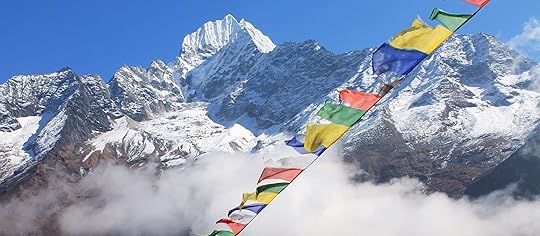
Peter Matthiessen joined biologist George Schaller back in 1973 on a trek into the Himalayans and recounted his saga in The Snow Leopard. I read this gripping book at age 30 and listened to Peter read the audiobook at age 65. And here I am, a 76-year-old, having just finished a reread.
As a way of sharing what resonated deeply in my encounter with this distinctive classic, below are a batch of quotes along with my comments.
“Twelve years before, on a visit to Nepal, I had seen those astonishing snow peaks to the north; to close that distance, to go step by step across the greatest range on earth to somewhere called the Crystal Mountain, was a true pilgrimage, a journey of the heart.”
Peter Mattheissen used this journey as a way of coming to terms with his grief for his beautiful wife and fellow Zen Buddhist practitioner, Deborah Love, who died of cancer in a New York hospital two years prior. Throughout the book, Peter writes of his relationship with “D” in light of Buddhism's insights into impermanence and suffering. “In those later months, it seemed that love had always been there, shining through the turbulence of waves, like the reflection of the moon in the Zen teachings; and love transformed the cruel and horrid face the cancer gave to death.”
“The Universe itself is the scripture of Zen, for which religion is no more and no less than the apprehension of the infinite in every moment.”
On nearly every page, Peter shares his thoughts and feelings as a spiritual pilgrim on the Buddhist path—and now that he's in his mid-40s and has spent the past twenty-five years traveling the world as a naturalist and collector of stories, Peter has much to share.
“I never saw drugs as a path, far less as a way of life, but for the next ten years, I used them regularly—mostly LSD but also mescaline and psilocybin. The journeys were all scaring, often beautiful, often grotesque, and here and there a blissful passage was attained that in my ignorance I took for religious experience: I was a true believer in my magic carpet, ready to fly as far as it would take me.”
Peter recounts his experiences with various drugs as a preliminary to his personal stepping on the Zen path. I suspect many readers will be able to relate to this aspect of the tale.
“Tukten had elf's ears and a thin neck, a yellow face, and the wild wise eyes of a naljorpa, or Tibetan yogi. He radiates that inner quiet which is often associated with spiritual attainment, but perhaps his attainment is a dark one.”
Tukten is one of the Sherpas Peter and George Schaller hire to act as a a guide and carrier of heavy loads. Throughout their trek over the mountains, Peter continually alludes to Tukten as someone he senses embodies what the Tibetans call crazy wisdom – a cause for unending fascination for a Westerner such as himself.
“What we see is Maya, or Illusion, the “magic show” of Nature, a collective hallucination of that part of our consciousness which is shared with all of our own kind, and which gives a common ground, a continuity, to the life experience. . .Therefore, every moment of life is to be lived calmly, mindfully, as if it were the last, to insure that the most is made of the precious human state—the only one in which enlightenment is possible.”
As someone who has practiced the discipline of meditation for over fifty years, I can attest to the wisdom of what Peter states here about the illusory nature of reality and the power of calm abiding in silence, solitude and stillness.
“The path enters a narrowing ravine that climbs to a high cleft between boulders, and the cleft is reached at the strike of the rising sun, which fills the portal with a blinding light. . . .“It helps to pay minute attention to details—a shard of rose quartz, a cinnamon fern with spores, a companionable mound of pony dung. When one pays attention to the present, there is great pleasure in awareness of small things; I think of the comfort I took yesterday in the thin, bouillon and stale biscuits that sly Dawa brought to my leaking tent.”
We're right there with Peter at every stage, on the mountain cliffs and descending the valleys, imbibing the color and texture of this marvelous part of our planet. Once you have finished the book, you'll have the feeling you've completed a journey of a lifetime. That certainly was the case with me.
“The Nepal government takes yeti seriously, and there is a strict law against killing them.”
In one mountain passage, Peter relates seeing something for a fleeting moment that might have been a yeti. The yeti definitely have captured the imagination of those of us living in the modern world. Some years ago, I asked Lobsang Lhalungpa, a Tibetan scholar who grew up in old Tibet, if he ever saw a yeti. He told me that, although he never saw a yeti himself, his parents had a rug in his home made of yeti fur, one of his enduring memories growing up.
I encourage you to make The Snow Leopard part of your own journey. I'll let Peter have the last words:
"I meditate for the last time on this mountain that is bare, though others all around are white with snow. Like the bare peak of the koan, this one is not different from myself. I know this mountain because I am this mountain, I can feel it breathing at this moment, as its grass tops stray against the snows. If the snow leopard should leap from the rock above and manifest itself before me—S-A-A-O!—then in that moment of pure fright, out of my wits, I might truly perceive it, and be free."
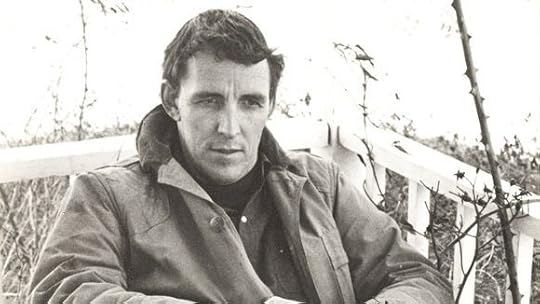
American author and naturalist Peter Matthiessen, 1927-2014
Comments
Post a Comment