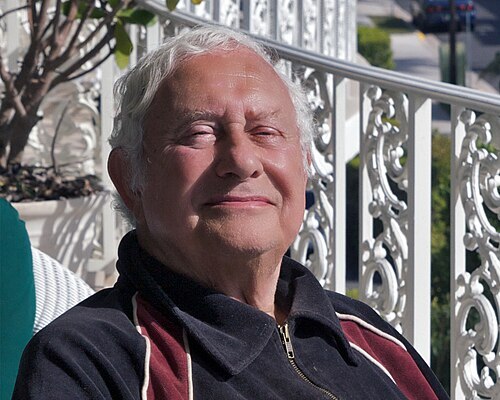
Homage to Paul West as Reviewer
Here's Paul West's incisive review of one of the most complex works of experimental postmodern fiction ever written - Dyad by Michael Brodsky.
ALMOST obscured by the mercantile banality of much that passes nowadays for fiction, there is another tradition in which, sure enough, the story gets told but only amid a flux of demoralizing brooding. This tradition, extending from Dostoyevsky's ''Notes From the Underground'' through Hesse's ''Steppenwolf,'' Sartre's ''Nausea'' and Beckett's ''Molloy,'' ''Malone Dies'' and ''The Unnameable,'' confronts us not with the hesitant artist flummoxed by his or her own arbitrariness, but one overpowered by is-ness, by the sheer surfeit of stuff in the world, among which another story is just another item, nothing special.
What we get in such fiction is less a story than the story of all the things that surround the story, from which it has to be rescued and retrieved - not just from among the incessant proliferations of nature that scared the Polish author Witold Gombrowicz, but also from among the forks and spoons, the empty bottles, the dead cars, the old-fashioned fountain pens, the razors, the paper, the orange peel, the mailboxes, the shoes, the airfields, the sanitary napkins, et cetera ad infinitum. The tradition has been called existential, for lack of a better term, but that implies some heroics of self-definition, whereas it is more properly ontological - having to do with sheer existence, with the mere presence of so much stuff.
Into this intimidating tradition there now marches - no, there slouches - Michael Brodsky, the author of plays and several previous novels. ''Dyad'' will slow you down to a slouch too and otherwise impede your gait as you try to make headway or, stepping aside for a while, try to figure out what's going on. Insofar as this novel has a conventional plot of any kind, it is about one man going in quest of another - the estranged son of a dying tycoon - and trying to retrieve him from the bohemian, improvident life he has chosen. But that is like saying ''The Odyssey'' is about bad navigation, or Proust's ''Remembrance of Things Past'' about dunking cookies. This is really a novel of the meditations that surround meditations, and an act of thought here is every bit as imposing and important as physical behavior.
But first and foremost, ''Dyad,'' as the title suggests, is about two beings joined together, which essentially is all we need on earth to begin writing serious fiction with. Beckett calls his dyads ''pseudo-couples,'' of course, but Mr. Brodsky, who is a much more freely associative writer than the intensely rigorous Beckett, lets his mind flow and go. ''Where is that grief for which I've sought in vain,'' his novel begins, ''I heard myself say for no particular reason.'' You know at once you are in the hands (the unrelenting grip) of a serious workman who reserves the right to amaze you several times on each page with sheer prose felicity. He has learned the lesson the minimalists never will: it doesn't matter how little the thing you write about is, if your prose style can conquer the vacancy. His does. In a coffee shop in Manhattan at the corner of Huron and Iroquois, the narrator orders coffee, but the counterman (who turns out to be Jamms Sr., the tycoon father of Jim, the swaggering, alienated painter son) invites him to go tour the Museum of Modern Art, where Jamms orders tea, tears ''grumpily with a fork at his muffin'' and puts down a stew of ''broccoli, cheese, stewed apricots, anchovies, olives, pinto beans and chocolate bars trampled underfoot, as well as breadcrumbs, oregano flakes, and Devonshire cream.'' Anything could go into that stew: the world is that man's portion; he is, after all, dying, as he informs the narrator: ''I got the diagnosis yesterday morning.''
Strictly speaking, that's enough story for a 300-page novel, just as it would be for a symphony; but the amazing thing is how much aggressive musing Mr. Brodsky manages to weave among his phenomena as he studies the Jamms clan: Jim and his doting Maggy (''raw with need''); the tumor-ridden father; two women called Betty and Bessy, the latter the prettier. The action or motion shifts from Manhattan to Rhinebeck and Long Island and back, a rite repeating. Unusual sentences, some with the obtuse beauty of the Austrian novelist Thomas Bernhard, abound in this narrative:. ''The sea was dead, time to return to my room and pack for the detectives calling me homeward. Walking to the elevator with [ Jamms Sr. ] was like undergoing a visitation not that he embodied the visitation, oh no, rather his presence - he waddled, yes indeed, I saw it now - somehow permitted the visitation - struggling as it emerged to draw off all sense of shame into its poison, known conversationally as sense of self.'' The sentence enacts the physical awkwardness it describes. Toward the end of the novel, he introduces a barely decipherable photograph: ''A little boy standing in front of a storefront next to his dad almost completely cut out of the frame. A boy and his truncated dad and the storefront beyond and behind furnishing just that indispensable shred of context that could hardly fail to bring a sting to the canthi.'' That last word, bringing the eyes into play, makes the whole sentence snap to seamless attention, making us wonder if indeed the narrator has been the son all along.
The main joy in this befuddled, self-deconstructing, semi-detective novel (a treatise on epistemology in disguise) is the lurch forward of the colloquial, idiosyncratic prose. ''Dyad'' is an anthem sung from an urban dump by one of those tenors who sing Bach's cantatas. In this case, the tenor has forgotten his lines, but sings improvisationally, with both poise and pain.
Comments
Post a Comment