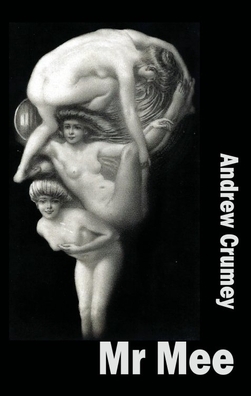
Andrew Crumey can be a challenging read, as if you're moving along a Möbius strip, forever encountering characters, stories, books, and events twisting, turning, and merging into one another on what appear to be two sides of a surface but are actually one. This certainly was my experience reading Pfitz and Mobius Dick.
However, Mr Mee is a bit different. We’re given three quite separate narrative threads (more detail below) that, for the most part, flow independently through the first three cycles. Then comes the fourth and final cycle, where the novel turns Crumeyan in the most provocative and intricately woven ways.
FIRST NARRATIVE
Through a series of mishaps, Mr Mee, an eighty-six-year-old scholarly Scotsman, purchases his very first computer to expand and quicken the pace of his current research revolving around an eighteenth-century inventor and encyclopedist by the name of Jean-Bernard Rosier.
Hitting the search button for the first time in his life eventually brings him to a particular site Mr Mee decides to keep on his screen while he retreats from his study for a needed rest. But his housekeeper of thirty years, Mrs B, arrives unexpectedly to drop off groceries. When Mrs B takes a look at what is on Mr Mee's computer screen, she lets out one of her little screams and immediately flees out the front door, never to be seen again.
What did this lady see? In the words of Mr Mee when he returns to his computer: “I found the woman now lying on her back, the book still raised to view. Her pose upon the bed was rather unladylike, resembling that of childbirth, I believe. I might also mention that my serendipitous discovery of so many unclothed women inhabiting the ‘Internet’ has been an educating experience; as well as becoming quite comfortable ‘scrolling’ or ‘zooming’ the image before me, I was also confident that the somewhat hirsute condition of the amply exposed pubes of this unknown woman is a common feature, if not a universal one; a fact whose discovery had at last clarified for me an anecdote which long puzzled me, concerning Ruskin's wedding night in Perth.”
Mr Mee's antiquated but elegant way of expressing himself, along with his naïveté regarding women, sexuality, and the computerized modern world, sets the tone for the entire narrative. And who turns out to be Mr Mee's new housekeeper, helper, and companion? Catriona, an attractive college student studying the life sciences. The naked body has never had a more appreciative audience than this eighty-six-year-old scholar.
Oh, and the book the naked woman on the screen is holding? Two names with a direct connection to Jean-Bernard Rosier.
SECOND NARRATIVE
Tall, thin Ferrand and short, stout Minard are a bookish eighteenth-century French variation of Laurel and Hardy. Ferrand, a failed cleric, and Minard, a failed law-exam taker, meet on a Paris bench and quickly become fast friends, living one notch above squalor in an attic flat and forever on the lookout for work as copyists.
After a few weeks, Ferrand brings home a huge stack of documents in need of copying. He was so hungry for work he didn’t even ask the name of the man who gave him the documents, where the mysterious giver lived, or exactly how much he would be paid for the task.
And the subjects of the documents? The giver told Ferrand their nature must remain absolutely secret. Realizing the potential hazard of their undertaking, the two men examine samples:
“Minard had found an essay which appeared to be on mechanics, but which on closer inspection proved to be concerned with poetry. Ferrand unearthed an article outlining a new theory of sun dials. Both men felt relieved. These papers were learned works of some very obscure and esoteric kind, and could be of no harm to anyone. Ferrand's mysterious friend had merely shown the obsessive secrecy characteristic of inferior artists, who believe their ideas might be worth stealing.”
Through a series of mishaps, a young woman by the name of Jacqueline is murdered, and the mysterious documents appear to be the reason for the crime. Ferrand and Minard conclude they themselves are surely the prime suspects. The pair flee Paris—their destination: Montmorency, Jacqueline’s hometown, where they plan to explain the tragedy to her parents.
Montmorency brings them into contact with none other than Jean-Jacques Rousseau.
THIRD NARRATIVE
A married, childless university literature professor whose specialties are Proust and Rousseau churns through a midlife crisis brought on by alarmingly declining health along with his current infatuation with an alluring student by the name of Louisa.
It is within this narrative that we are given the bulk of Crumey’s reflections on personality and self, identity and society, intellect and desire, history and textuality, Eros and Thanatos.
“When I was younger, my infatuations more abstract and serene, meeting Proust seemed the most wonderful dream imaginable; one to make heaven itself an attractive proposition. I no longer feel quite the same way, now that I can better appreciate the point Proust was making, about this ‘person called “I” who is not always myself’, a character to be found at times in every one of us, and of far wider significance than the narrator of À la recherche du temps perdu (the single unfinished novel to which Proust's comment referred), one who would preoccupy me quite considerably in the coming weeks.”
It is this professor, whom we later come to know as Dr. Petrie, who is in store for the greatest shocks when certain facts are eventually revealed.
Turning to the philosophic, since this is Andrew Crumey, we are well advised to keep attuned to developing patterns and the ways in which Dr. Petrie’s reflections on various aspects of life play out across all three narratives. Thus, when we arrive at Mr Mee’s letter to the professor (in effect, the fourth cycle) along with the novel’s Epilogue, we are better able to appreciate the subtle connections and intertwining themes underlying the entire novel.
Reading Mr Mee is a delight. Not only are we treated to stimulating ideas, but Crumey’s stellar storytelling abilities are on full display. If what I’ve written sounds appealing, this novel is most certainly for you.
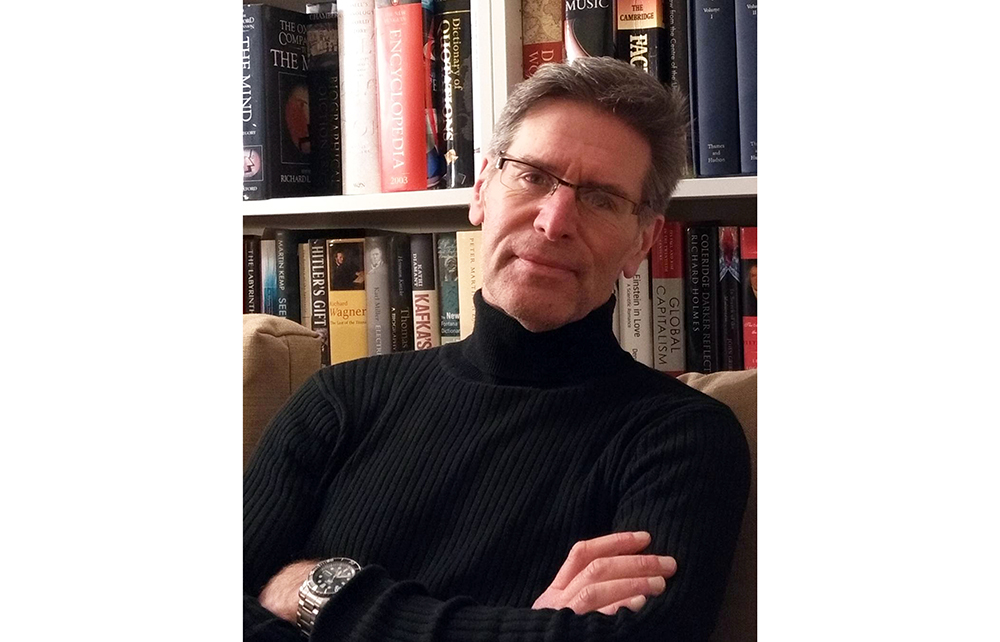
Scottish author Andrew Crumey, born 1961
Comments
Post a Comment