
The novel's protagonist, a man of many names, reflects: "Among the tasks he expected to be assigned was penetration of a rival corporation's research into so-called olivers, electronic alter egos designed to save the owner the strain of worrying about all his person-to-person contacts. A sort of twenty-first-century counterpart to the ancient Roman nomenclator, who discreetly whispered data into the ear of the emperor and endowed him with the reputation of a phenomenal memory." Ah, a cellphone with access to AI!
Back in 1975, with Shockwave Rider, John Brunner imagines many of the innovations that are now part of the fabric of everyday life. Brunner took Alvin Toffler's Future Shock as his inspiration for this work of fiction. As Pat Cadigan stated in her introductory essay to the SF Masterworks edition, "John Brunner may not have painted the future exactly as it became, but he saw it well enough - better, in my opinion, than Alvin Toffler." I agree with Cadigan. And there's an excellent reason why Brunner's vision topped Toffler's: Toffler predicted the future whereas Brunner imagined the future.
In addition to John Brunner's accurately imagining many, many facets and details, gadgets and gizmos, of life here in 2026, there are a large batch of memorable quotes sprinkled through the book's 280 pages. Here's a sampling:
“There are two kinds of fools. One says, "This is old, and therefore good." And one says, " This is new, and therefore better.”
“If there is such a phenomenon as absolute evil, it consists in treating another human being as a thing.”
“Damn right I voted for him. But if I’d known then what I know now, I wouldn't have cast a vote—I’d have cast a brick.”
“Toffler’s Law, I guess: the future arrives too soon and in the wrong order.”
“We fret about how to keep going the same old way when we should be casting around for another way that’s better.”
“Few of us are equipped to cope with the complexity and dazzling variety of twenty-first-century existence.”
“There was exactly one power base available to sustain the old style of government," Nick grunted. "Organized crime."
“Governments rely on threat and trauma to survive. The easiest populace to rule is weak, poor, superstitious, preferably terrified of what tomorrow may bring.”
“I always wondered what democracy might smell like.”
“I don’t think of my fellow men as dangerous. I think of them as capable of occasional dangerous mistakes.”
John Brunner could clearly see that the real future wouldn't be defined by gadgets and networks alone, but by the strain they place on all of us struggling to remain fully human.
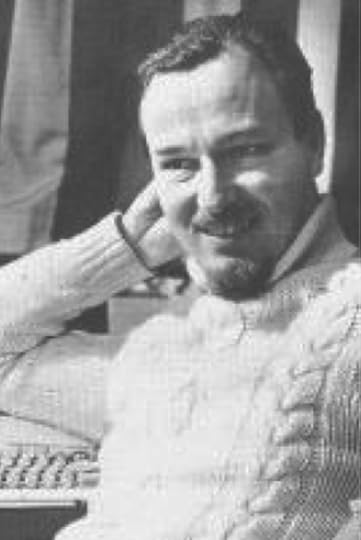
British SF author John Brunner, 1934-1995
Comments
Post a Comment