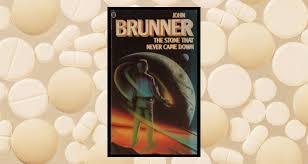
John Brunner's 1973 novel, The Stone That Never Came Down, is set in a near-future, blighted London during the Christmas season, where temperatures are subzero and the entire city groans under layers of ice and snow. Governmental incompetence, massive unemployment, restricted city services, and skyrocketing inflation leave huge swaths of the population, especially children, malnourished and famished.
This crushing downward spiral has given birth to The Campaign Against Moral Pollution (headed, of course, by a wealthy matron and backed by political power). There are also many religious fanatics known as the Godheads who roam the streets and break into homes, demanding alms with threats of broken bones and shattered windows for anyone who dares not comply. Brunner is keen to observe the way a focus on morals, especially anything revolving around sexuality, can become a substitute for addressing dire economic and social ills.
Brunner introduces a number of men and women who are suffering in various ways in this devastated, frozen metropolis, most notably Malcolm Fry. Malcolm has been unemployed for six months, the consequence of objecting to the views expressed by a representative of The Campaign Against Moral Pollution at the school where he taught history. A shame, since his students loved him. An even greater shame that his wife had enough of his unemployment (Malcolm has been blacklisted as part of the Campaign's purification program) and left with their two young children.
All this has left Malcolm deeply depressed, leading him to visit a pub where he meets a stranger who gives him a capsule to ease his pain. Thinking he couldn't feel any worse, Malcolm swallows the drug. Now, back home the following morning with his girlfriend Ruth, he begins to experience some of its effects. Quite remarkably, Malcolm feels euphoric and possesses an incredible memory for events and details long forgotten, along with an exceptional ability to analyze information. Added to this, as unbelievable as it might seem, Malcolm eventually recognizes that the principal change he has undergone is a dramatic increase in empathy and understanding of others.
Unlike Brunner's Stand on Zanzibar and The Sheep Look Down, this is a short novel (200 pages) that can be read in a day or two. Events move apace. The various narratives develop and intertwine, leading to the heart of the tale: a conversation Malcolm and Ruth have with a doctor and the two principal scientists at the research institute responsible for developing this powerful drug that permanently alters human nature. Oh yes, VC appears capable of transforming humanity itself, eliminating such traits as fanaticism, aggression, prejudice, and the desire to dominate. Since the world has sunk to such a dismally low level of ignorance and violence, the group concludes in their despair that VC would be an improvement. Their decision, however, proves moot. They soon discover that VC has already been released into the population, spreading through casual contact and blood transfusions.
Brunner pushes us to confront important philosophical questions. What would be lost if we no longer possessed the capacity for aggression and other seemingly negative tendencies? Are such traits separable from courage, ambition, passion, and individuality? And if such transformations in human nature could be made, who would get to decide? Would you be satisfied if you were excluded from the decision-making process?
It is now 2026. With our own culture awash in drugs that alter mood, perception, and behavior, the questions posed by Brunner's novel feel more relevant than ever: if we could permanently change human nature, should we?
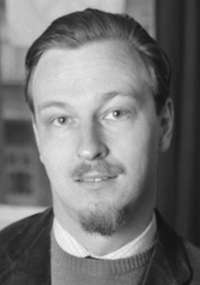
British SF author John Brunner, 1934-1995
Comments
Post a Comment