
"The artist is not a special kind of man, but every man is a special kind of artist."
The above quote by the philosopher Ananda K. Coomaraswamy expresses the core values and underlying spirit of this isolated island nation in Austin Tappan Wright’s 1,000-page novel, Islandia. For its citizens, the boundaries between labor, art, and life do not exist; building a stone wall, harvesting grain, or preparing a meal are elevated to conscious, creative acts. This philosophy is integrated into the very architecture of their way of life, where hand-crafted homes are built not for speculative real estate, but to endure for centuries as a tribute to their long-standing customs.
This is the world that narrator John Lang encounters upon his arrival in 1907. A Harvard graduate of the class of 1905, Lang secures an appointment as the first official U.S. Consul to this fiercely isolationist country through a combination of family connections, a college friendship with a prominent Islandian named Dorn, and a rare mastery of their native language.
After immersing himself in this singular agrarian culture, Lang observes a striking void: “There were no theaters or concerts, no baseball or football games, no tennis, no clubs, no shop fronts or bright-hued advertisements, no sense of swift journeys possible, no large dances, no restaurants.” In a contemporary Western context, this catalog of absences reads like extreme deprivation. Yet Wright frames it as a liberation. In the industrialized West, commercialized leisure, athletic spectacles, and the cult of velocity function primarily as compensatory mechanisms—sugar-coated frosting pasted over the mental scars of alienated labor and the drudgery of the paycheck. The Islandians, conversely, require no such escapes. Because their daily work already embodies a fulfilling, spiritually coherent expression of their creative depths, they have no need for an entertainment industry or a sports stadium to rescue them.
The depth of this resistance becomes vivid in a comedic yet revealing clash between Western enterprise and Islandian stolidity. Lang observes Jennings, an American salesman, attempting to pitch a modern, mechanized cultivator to a group of native farmers. Jennings’s subsequent breakdown is a masterclass in cross-cultural frustration: “There is no getting anywhere with these Islandians... I was explaining how simple it was to keep up. I showed how it was oiled. They all began to smell the oil and look disgusted! And they are always asking about the noise. And doesn't it break?” Jennings views efficiency as an objective moral good; the Islandian farmers, whose agrarian rhythms have sustained generations, view the machine as an invasive, sensory assault. Their rejection is not a Luddite knee-jerk reaction, but a refusal to allow a noisy, volatile apparatus to rupture a daily routine already infused with a profound, localized devotion.
To fully comprehend this resistance, one must decode the unique emotional vocabulary of Wright’s utopia, which categorizes affection into four distinct quadrants: ania (abiding companionship), apia (sexual passion), tanrydoon (deep, non-romantic friendship), and, most critically here, alia—the fierce, visceral love for one’s ancestral land and lineage. For the Islandian farmer, alia is the foundational bedrock of existence, an ongoing dialogue with the soil. By filtering Jennings's pitch through the lens of alia, the salesman ceases to be an apostle of progress. Instead, he is revealed as a short-sighted slicker attempting to commodify a sacred relationship, offering a smelly, noisy contraption to disrupt a people already in absolute harmony with the natural rhythms of their world.
Lang’s diplomatic mission is explicitly tethered to this ideological fault line. The Islandian government is deadlocked by two fiercely competing factions. On one side stands the progressive Mora party, which advocates for globalization and trade. Lord Mora dazzles his constituency with promises of Western material abundance, pointing out that Islandia lacks locomotives, automobiles, imported delicacies, and the rapid synchronization of telephones and telegraphs. To Mora, Western civilization is a dynamic, irresistible force—"vivid, active, and various"—offering an escape from what he views as provincial stagnation.
Opposing him are the conservative Dorns, who counter with a chillingly prescient critique of global capitalism. They argue that opening the borders will not invite benign foreign governments, but rather rapacious international conglomerates that will dictate Islandia’s destiny. For the Dorns, the introduction of industrial convenience is a Trojan horse. They foresee an inevitable societal apocalypse: the deskilling of the populace, the collapse of the nuclear social fabric, and "the gradual detachment of large classes of people from the soil." To lose alia is to lose the psychological and spiritual anchor of their civilization, trading a legacy of hand-crafted sovereignty for the spiritual exile of the factory floor.
Does Lang emerge from his tenure unchanged? Predictably, the answer is an emphatic no. His assimilation into this alternative economic landscape is accelerated and complicated by his burgeoning relationships with two Islandian women. Through these emotional attachments, Lang's American conditioning begins to dissolve. He ceases to view Islandia as an economic puzzle to be solved, discovering instead the profound internal logic of its culture. How this intricate personal and political drama resolves is a trajectory best left for readers to discover within the sweeping pages of Wright’s narrative.
Behind this seamlessly constructed world lies a publication history almost as extraordinary as the text itself. Austin Tappan Wright (1883–1931), a distinguished professor of admiralty law, spent decades secretly cultivating Islandia as a private obsession, drafting its contours outside the margins of his rigorous academic career. When he died in a tragic automobile accident at age 47, he left behind an astonishing literary estate: a 2,300-page handwritten manuscript, complete with detailed appendices outlining the fictional nation's history, geology, and complex linguistics.
The text’s journey to the public was an act of generational devotion. Wright’s widow, Margaret, spent years painstakingly transcribing and organizing the chaotic mass of papers. Following her death, their daughter, Sylvia, assumed the mantle. Recognizing the raw brilliance of her father's lifework, she approached the publisher Farrar & Rinehart. Working alongside editor Mark Saxton—who pared the sprawling manuscript down to roughly a third of its original volume—the family finally saw Islandia published in 1942. It was immediately recognized as a singular milestone in utopian literature.
Ultimately, a contemporary reading of Islandia requires a clear-eyed acknowledgment of its inherent friction. The preservation of a society where every citizen remains, in Coomaraswamy’s phrase, “a special kind of artist” demands a highly static, insular, and strictly managed agrarian hierarchy. Yet this utopian friction does not diminish the novel's profound power as a cultural mirror. Wright forces us to interrogate our own hyper-efficient, 21st century landscape—a world of packed stadiums and unending streams of entertainment designed to anesthetize millions of men and women condemned to drudgery and alienation during their years of work.
Reflecting on the debate between Lord Mora and the Dorns, we are forced to ask our own urgent questions: Is our cult of convenience worth the psychological vacancy it produces? What have we bartered away on the altar of progress? Wright’s enduring classic does not offer easy answers; instead, it leaves us with a haunting, necessary choice of whether we would dare to choose the slow artistry of Islandia over the mechanized comfort of our own lives.
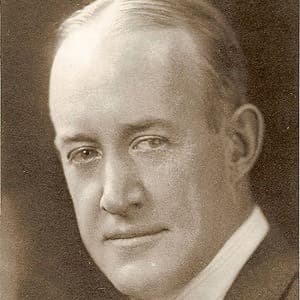
American author Austin Tappan Wright (1883 - 1931)
Comments
Post a Comment