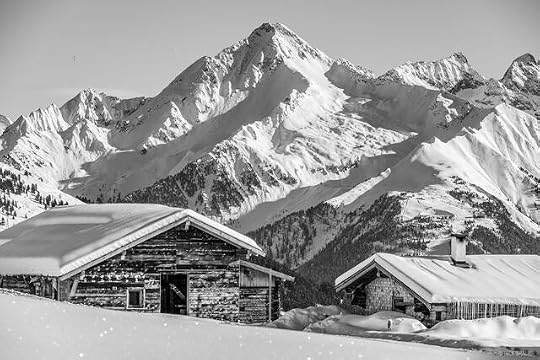
Back in the early 1960s, a young, brash Austrian poet by the name of Thomas Bernhard handed over to his publisher his fourth collection of poetry with the title Frost. The publisher flatly rejected it.
Positively furious, the young poet retorted that he would write a novel instead. After locking himself away for seven weeks in total isolation, Bernhard emerged with his manuscript for the novel Frost, where he took the coldest, darkest, and bleakest imagery from his rejected poems and funneled it into prose.
And when Frost landed in bookstores, it proved a literary explosion: the novel caused massive consternation in Austria since, at that time, the country was attempting to portray itself as a beautiful, idyllic paradise—a land populated by cultured, refined men and women.
Young Bernhard tossed a dirty bomb into such an outlandish lie by portraying the Austrian countryside as it truly was: a freezing slaughterhouse filled with nothing but rural goons and thugs, violent outcasts, and generational insanity. Frost instantly established him as the country's foremost Nestbeschmutzer (nest-fouler)—a title Bernhard wore with tremendous pride.
Full review to follow . . .
Comments
Post a Comment