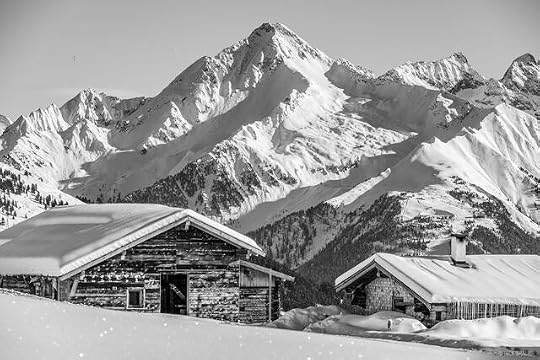
Back in the early 1960s, a young, brash Austrian poet by the name of Thomas Bernhard handed over to his publisher his fourth collection of poetry with the title Frost. The publisher flatly rejected it.
Positively furious, the young poet retorted that he would write a novel instead. After locking himself away for seven weeks in total isolation, Bernhard emerged with his manuscript for the novel Frost, where he took the coldest, darkest, and bleakest imagery from his rejected poems and funneled it into prose.
And when Frost landed in bookstores, it proved a literary explosion: the novel caused massive consternation in Austria since, at that time, the country was attempting to portray itself as a beautiful, idyllic paradise—a land populated by cultured, refined men and women.
Young Bernhard tossed a dirty bomb into such an outlandish lie by portraying the Austrian countryside as it truly was: a freezing slaughterhouse filled with nothing but rural goons and thugs, violent outcasts, and generational insanity. Frost instantly established him as the country's foremost Nestbeschmutzer (nest-fouler)—a title Bernhard wore with tremendous pride.
The narrative itself unfolds when a young Austrian medical student accepts a doctor's (his mentor) assignment: take a train to a remote mining town locked away in the Alps in order to observe and report back on the doctor's reclusive brother, a painter by the name of Strauch. In order to conduct his study in secret, he is to pose as a law student with a fondness for Henry James. Thus, the 342-page Frost, superbly translated by Michael Hofmann, is, in effect, the student's day by day report over the course of twenty-seven days.
The student takes a room in the same inn as Strauch and quickly befriends him, joining the painter on his long walks through the nearby forest. Strauch doesn't hold back on sharing his judgments. First, on the men: “The way the workers go around here, they live for sex, like most people, like all people . . . they live to the end of their days in a continual wild process against modesty and time and vice versa: ruination.” And then the children and young adults of Weng: “All of them are conceived in drunkenness. For the most part criminal characters. A high percentage of young people are in and out of prison. Assault and battery, and underage or unnatural sex are standard offenses. Child abuse, killings, are Sunday afternoon stuff . . . The animals are better off: after all, what people would really like is a pig, not a kid.” With such brutal descriptions, we can clearly see why Bernhard's novel caused shock and outrage, especially among his fellow countrymen attempting to pump up tourism in Austria.
More specifically, the student learns that in order to free herself of her duties as a wife and engage in a relationship with another man, the landlady pointed out to the police that her husband clubbed one of their customers to death. Of course, the landlady is terrified of what will happen when her husband gets out of prison. Also, so he is given to understand, the landlady routinely beat her two daughters, mercilessly punching and kicking them—proving Strauch's point that domestic horror in Weng is just regular Sunday afternoon stuff.
Early on, on the fifth day, the student includes the following in his report regarding Strauch: “He always put on good clothes to go out in the street. But at home, in the privacy of his room, he slumped into the lowest frame of mind, into sleeplessness, into ponderings about science and art, into poverty. The more his poverty deepened, the more he shut himself away. His “artistic endeavors” didn't impress him. He could see all too clearly that the work he produced, often effortfully, was nothing to anyone to remark on, much less celebrate.”
And further on, Strauch tells him directly: “You have no notion of the enormity of my pain. Pain and torment have moved in together; my arms and legs may fight back, but increasingly they're becoming relegated to the status of innocent victims.” Turning the pages of Frost, it is as if the raw, violent landscape, including the generational insanity of the men, women, and children of Weng, has relentlessly invaded and saturated not only Strauch's body but also his psyche.
Strauch admits he had burned all of his paintings prior to traveling to Weng, stating, “I had to get rid of those things that were a perpetual reminder of my worthlessness.” Why such an extreme action? My own sense is that Strauch likely received his training in the decorative, idealized style of 19th-century Austrian portraitist Friedrich von Amerling, painting within those rigid academic boundaries for most of his career.
Eventually, however, Strauch's inner artistic fire burned with a ferocity to express itself differently—in a style deeply reminiscent of the raw, fractured expressionism of Max Beckmann. Seen in this light, it is not at all surprising that he committed his canvases to the flames, viewing his own clean, Amerling-like paintings as pure saccharine kitsch. Once he arrived in Weng and imbibed its rural putrid, frozen rot, his artistic rebellion became so intense and radical that he bypassed the canvas entirely; instead of switching to paint like Beckmann, he transformed his very life into a flesh-and-blood work of Beckmann-like expressionism.
This violent transfiguration of life into art directly mirrors Bernhard’s own monumental shift as a writer. When his publisher rejected his poetry collection Frost, Bernhard didn't just switch mediums out of spite; he recognized that traditional poetry was itself an "Amerling-like" constraint. The rigid boundaries of lyrical verse were entirely inadequate for containing the sweeping, suffocating horrors of post-war Austria and the profound range of ideas and feelings he burned to express.
Locking himself away for seven weeks, Bernhard poured the cold, bleak imagery of his poetry into a radical new prose style. Just as the fictional painter Strauch burned his canvases to live out a Max Beckmann-like expressionism, Bernhard abandoned conventional poetry to give birth to a breathtaking, expressionistic masterpiece of fiction. In the end, both Strauch and Bernhard realized that when their art demanded compression, distortion, the brooding, the jagged, and the abrasive, the old forms must be committed to the flames.
Lastly, we can ask: Does Strauch have a profound effect on the narrator? The answer is an emphatic "yes." However, the chilling details of the medical student's transformation are best left for each reader to discover.
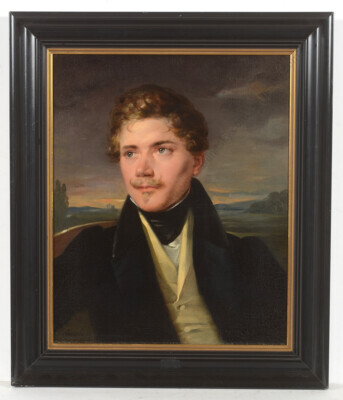
Friedrich von Amerling, One of the two brothers Billhuber
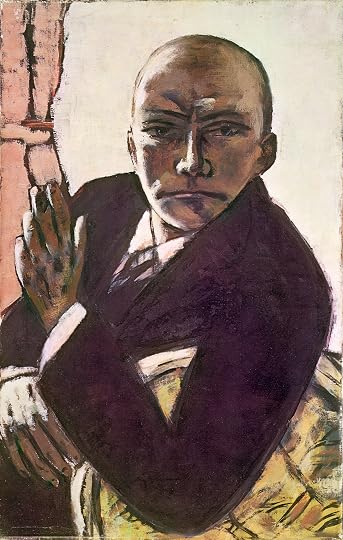
Max Beckmann, Self-Portrait
Comments
Post a Comment