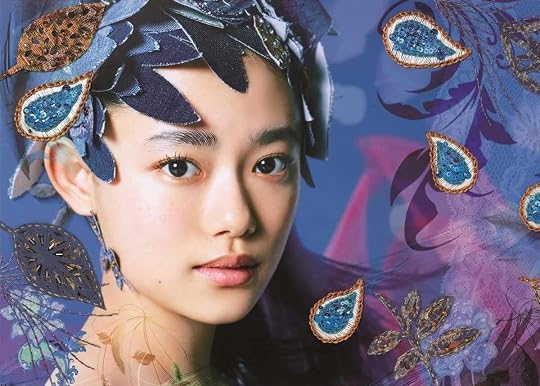
British author Ian Watson (1943-2026) provides readers with a string of fantastic explosions of imagination in this short story published in 1976.
THE GIRL WHO WAS ART
We're in Japan in the near future, where young women like our narrator attend what she calls an “Image School.” There, her mind and especially her body are trained—molded, sculpted, and transformed—in order to recreate the works of a superstar artist like Tadanori Yokoo. “For I am an intelligent flower that has the privilege of arranging itself—according to T's immortal graphic designs, prescient patterns of our new Japan to which the whole world turns.”
However, a few scenes further along, she relates a conversation she overhears while posing on tiptoe with legs wide apart as “The Gratitude of Aeschylus”. The conversation is between an art connoisseur and a big, burly corporate tycoon, and it amounts to a nightmare: the form of art she has sacrificed her life for will quickly be discarded and replaced by the latest fad—sprayed plastic on the street that's peeled off in squares and then exhibited. Thus comes the inevitable, the ultimate insult in this finicky futuristic art world: “My Master had put me out with the trash.”
Ian Watson has crafted a deeply unsettling story that raises a number of critical questions relating to aesthetics and the philosophy of art. Chief among their number:
Being and Art
Can a human being become a work of art without losing their humanity? The Image School appears to erase the boundary between artistic material and living subject. What happens if a young lady's body is weakened, damaged, or even crippled by such performance art? What dangers lurk when someone is used and viewed as an art object rather than a person?
Ownership and Autonomy
Who possesses the artwork when the artwork is a person? While Tadanori Yokoo supplies the designs, and the Image School shapes her, it is the patrons and the general public who consume the resulting spectacle. Yet, she is the one who supplies her body, intelligence, discipline, pain, and ultimately her life. So, who can claim ownership—and to what extent? Watson turns the old question of artistic ownership into a full-blown nightmare.
The Value of a Work of Art
Does artistic value reside in the artwork itself, or is it manufactured by fashion, institutions, critics, collectors, and markets? This question is central to Watson's tale. Nothing intrinsic to the narrator has changed. Yesterday, she represented the pinnacle of sophisticated art; tomorrow, sprayed plastic becomes fashionable, and she will be considered nothing more than trash. Watson asks us to ponder to what extent aesthetic value can endure when novelty, newness, and the current fad become the supreme criteria.
Commercial Value Rules
What happens when the distinction between aesthetic value and commercial value collapses? The corporate tycoon in the tale takes on a special significance here. Ideally, art belongs to a realm of beauty, imagination, transformation, and perhaps even transcendence. But in the future Watson imagines, artistic movements behave like ordinary consumer products with increasingly short life cycles. The young narrator discovers the horrifying consequence of being both a masterpiece and merchandise: obsolete art becomes obsolete merchandise. She is relegated to the trash heap.
The Self in Self-Transformation
Does self-transformation become worthless if the ideal goal has been supplied by someone else? The narrator proudly calls herself an “intelligent flower” capable of arranging herself. She isn't simply passive material; she participates willingly and intelligently in her own aesthetic transformation. But her chosen forms are not her own; they are the forms created by her designers. This raises the critical question: Is she realizing herself—or bringing about her own self-erasure?
On the Standard of Taste
If our tastes in art have been created, manipulated, and engineered by society, are they really ours? The narrator doesn't merely submit to the Image School; she has internalized the school's values so completely that she experiences her transformation as a privilege and a source of fulfillment. Watson therefore pushes beyond mere coercion into something more philosophically troubling: What if power works most effectively not by forcing us to do what we dislike, but by teaching us to desire what it wants from us?
Art and Ethics
We usually grant artists enormous latitude when they pursue their artistic vision. But how much latitude should we give designers like Tadanori Yokoo and institutions like the Image School? Such entities are not dealing with oil, charcoal, or marble, but with human bodies. It cannot be stressed enough: What if their practices require the permanent disfigurement of the bodies of young girls? Even if those young girls are entirely willing to go along, where do we draw the line?
The Girl Who Was Art is an extraordinary tale that forces us to explore what it means to participate, on any and all levels, in the world of art and aesthetic experience.
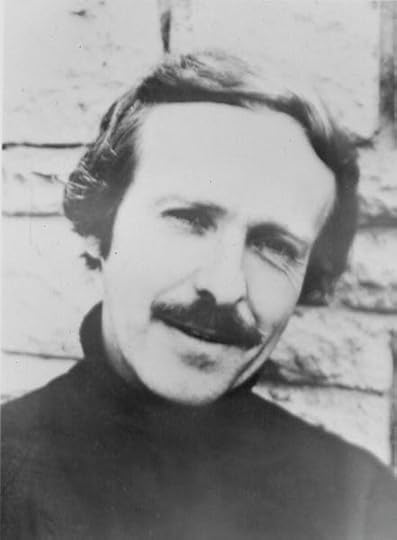
British author Ian Watson, 1943-2026
Comments
Post a Comment