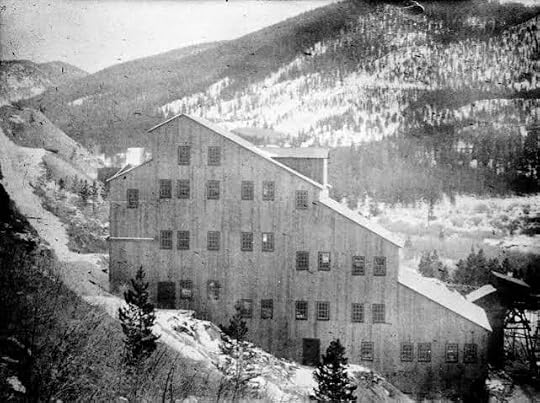
Thomas Bernhard's 1970 novel, The Lime Works, is set in an abandoned lime works on the outskirts of Sicking, a rural mountain village in Upper Austria. Shut off from the world with his crippled wife in this fortress-like structure, an older man by the name of Konrad prepares to write a scientific treatise entitled The Sense of Hearing.
STRUCTURE
Similar to his other major novels, The Lime Works is written in one continuous paragraph. However, unlike novels such as Woodcutters, where the narrator is central to unfolding events and speaks directly to the reader, with The Lime Works Bernhard does something completely different: we are not given any first-hand accounts from Konrad and his wife; rather, everything reaches us indirectly through anecdotes, recollections, reports, gossip, even contradictory information—“Konrad is supposed to have said,” “Konrad told Wieser,” or “Konrad is supposed to have told Fro.”
Indeed, nearly every page contains language like “Konrad is supposed to have said.” So, in this sense, similar to the narrator of Woodcutters telling us about his “sitting in the wing chair,” Bernhard leans heavily on classical music’s ostinato, a musical phrase or rhythm repeated continuously. Other critics have cited the music of such composers as Joseph Matthias Hauer and Arnold Schoenberg, but for me, the musical counterpart of The Lime Works is definitely Philip Glass’s monumental minimalist Music in Twelve Parts, with its fast-flowing stream of notes, underlying shifting patterns, and passages that strike the ear as solid walls of music.
CHARACTERS
While the tragic orbit of Konrad and his invalid wife dominates the plot—supported by the tenant Hoeller, local officials, and gossiping townspeople—two non-traditional figures demand special mention:
The Traveling Insurance Salesman: He is the unnamed narrator and compiler of this 200+ page report, a dark irony since this masterpiece of psychological horror and existential dread is delivered to us by an outsider whose day job is calculating risk and hawking life insurance policies.
The Lime Works: The setting itself functions almost as the primary antagonist. A cold, labyrinthine structure with thick walls, it quickly transforms into a grim psychological prison as Konrad installs bars on the windows and heavily bolts the doors, creating an overwhelming, suffocating pressure on nearly every page.
MURDER
In the opening pages we learn that shortly after moving to the lime works, Konrad served nine and a half months in Wels district prison for shooting gamekeeper Koller, whom he claimed to have mistaken for a burglar, an incident that “brought to light about fifteen previous convictions of Konrad's mostly for libel and aggravated assault, they say at Laska's.”
We also learn that about five years later, while still living in the lime works, Konrad shot his wife with a Mannlicher carbine, a weapon she kept behind her invalid chair. Why he shot his wife and exactly how he delivered the shot or shots are matters of debate among the townspeople. The 200+ page report we are reading then reaches backward, recounting events at the lime works prior to the murder.
THEMES
The cold, thick walls of the lime works intensify the novel’s themes of isolation, madness, obsession, paralysis, cruelty, dependency, illness, marriage, failure, imprisonment, hearing/silence, along with an extreme fear of intrusion. “Inside the lime works a person had to be armed at all times, had at every moment without exception to reckon with the likelihood of a crime against oneself.”
And then there is Konrad’s drive to experiment as part of his research for his book on the sense of hearing. “According to the gossip he is terrible, devoted, sadistic, attentive, all at the same time. They praise him for fetching her meals from the tavern, but say he is destroying his wife by using her ruthlessly as a guinea pig for his scientific experiments, his so-called Urbanchich method.”
ATMOSPHERE
Oh, yes, a reader of the novel feels the ice-cold cement walls of the lime works prison, an unending labyrinth of claustrophobia. For me, it was a triple whammy: turning the pages, I continually felt encased within the thick, solid walls of the lime works. I also felt I was at all times standing next to Konrad, watching his brows furrow, the hollowing of his cheeks, his eyes flash, and his hands tremble. Lastly, I felt as if I was trapped in Konrad’s obsessive, brutal mind, as the workings of his mind were, in turn, trapped within the lime works itself.
And this sense of claustrophobia escalates through Bernhard’s use of syntax, rhythm, and repetition. On Konrad reflecting on what to sell to generate money: “I will not sell the Francis Bacon, never the Francis Bacon, absolutely not, I will not sell the Francis Bacon, no I won’t, not the Francis Bacon. If the men from the bank come snooping around I shall hide it. I had better hide the Francis Bacon, Konrad kept thinking over and over.”
MINIMALISM
What do Konrad and his wife look like? Other than a few brief details, as readers we're compelled to use our imagination to supply the missing information. Likewise with all the other players in the ongoing drama, including the lime works itself. The photo above is the way I picture the lime works in January in the Upper Austrian mountains.
PSYCHOLOGY
Konrad’s obsession and paralysis revolving around writing—and not writing—his book on hearing constitute one of Bernhard’s most extreme psychological portraits. Reading about Konrad’s perfectionism, his intellectual monomania, and his dissolution of the boundary between experiment and cruelty would be painful if it weren’t for a tincture of black humor.
“Then there was his wife’s earache, probably brought on by his intensified use of her in accordance with the Urbanchich method of hearing tests and exercises, brought on by the progressive ruthlessness with which he had to make her undergo these exercises, which he had resolved to apply in a more complicated, radicalized form, increasingly so, an unshakable resolve, which naturally caused growing tension between him and his wife. He couldn’t possibly stop experimenting on her now all of a sudden, he told Wieser; he had gone too far to stop.”
AESTHETICS
My reading of this Bernhard novel was a rich aesthetic experience. There’s the musicality of rhythm and artistic propulsion alive on every page. And even when Bernhard adds elements of the grotesque, they are delivered in an aesthetic mode. Here’s one villager’s description of Konrad arriving at the Wels prison following his arrest for the murder of his wife:
“And when they finally got there, Konrad actually came tumbling out of the wagon head first; with his handcuffs on he could not hold on to anything and maybe one of the officers pushed him a little, and him without any shoes on, all he had on his feet was a pair of felt socks, they say, because the police were in too big a hurry to give him a chance to put on a pair of clean shoes.”
Ah, even rough justice, Upper Austrian-style, can be transformed into an aesthetic experience when presented by Thomas Bernhard.
Comments
Post a Comment